
Late updated: 02 Dec 2025 10:12
Written by: Emma Saunders
Exploring The Origins Of Bubble Sports Activities: A Historical Overview
Bubble sports activities, including bubble football and other variations, have surged in popularity, captivating enthusiasts worldwide with their combination of fun and physical engagement. While these activities might seem like a recent development, their origins provide a fascinating look into the evolution of playful and interactive sports. At their core, bubble sports are an innovative fusion of traditional sports concepts interwoven with elements of light-hearted entertainment.
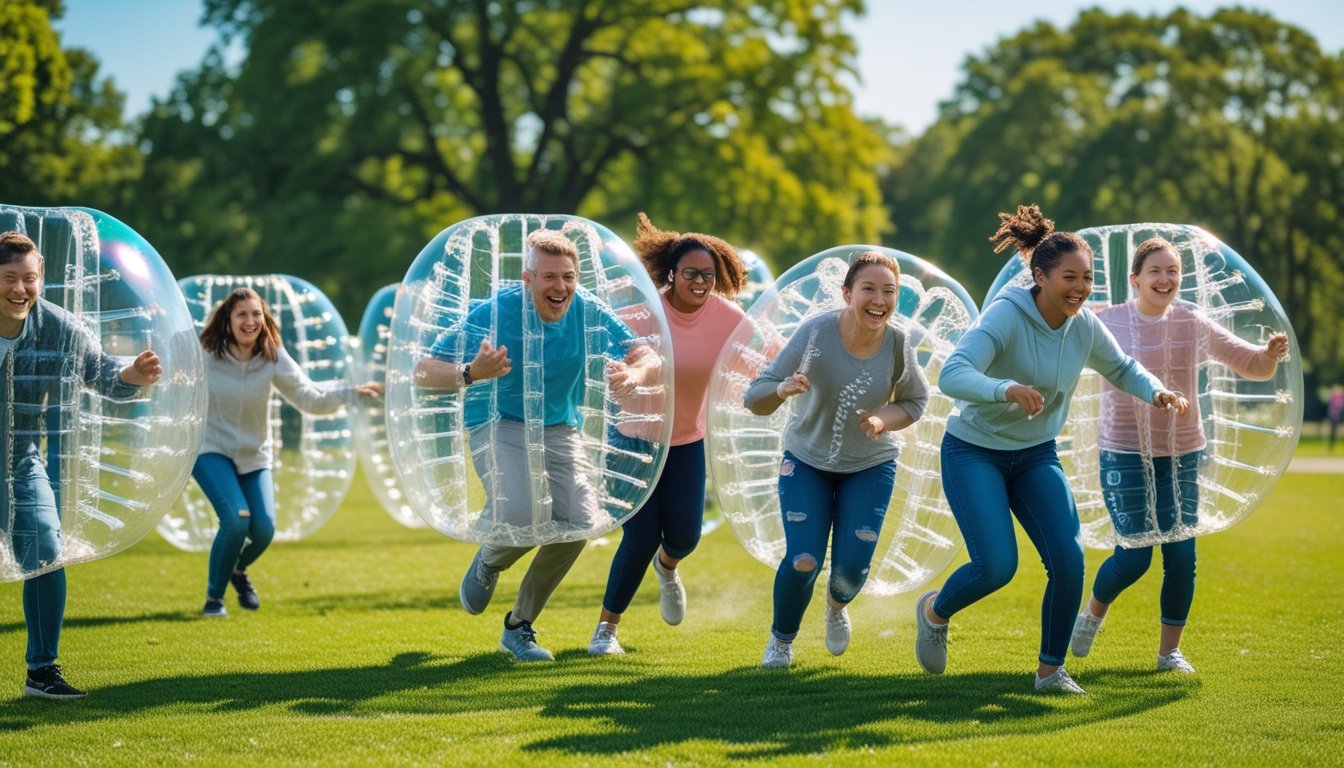
Examining the origins of bubble sports uncovers a tapestry of creativity and adaptation, originating from an experiment on a Norwegian television show that quickly captured global interest. The appeal is simple: imagine playing football while encased in a giant inflatable bubble, which adds a layer of hilarity and novelty to the sport.
As we navigate the world of bubble sports, we see how they've adapted across different cultures and social settings, turning into a phenomenon that transcends borders. The sheer flexibility and entertainment factor have carved a niche that continues to expand, drawing both seasoned athletes and casual participants.
Key Takeaways
- Bubble sports mix traditional concepts with playful innovation.
- Originated from a Norwegian TV show and became globally popular.
- Flexible and fun nature appeals to varied cultures and ages.
Origins and Global Spread of Bubble Sports Activities
Bubble sports, particularly bubble football, have transitioned from a novel concept to a worldwide sensation. The activities are distinguished by players wearing inflatable bubbles, turning traditional sports into amusing and safe experiences. Initially emerging in Norway, these sports are now enjoyed from London to Brazil, supported by leagues and international events.
Birth of Bubble Football in Norway
The inception of bubble football traces back to Norway, where the game was born out of a desire to inject fun into conventional sports. It all started with a simple idea: combining football with the safety and humour of inflatable bubbles. This concept allowed players to engage physically without the risk of severe injuries, thanks to the cushioning effect of the bubbles. Bubble football, also known as zorb football, quickly became popular, as participants could enjoy the excitement of playing without the usual restraints of traditional football. Importantly, it brought people together, offering a fresh twist on a beloved sport, and inspired many to try it.
Influence of Henrik Elvestad and Johan Golden
Two Norwegian comedians, Henrik Elvestad and Johan Golden, played pivotal roles in popularising bubble football. Their enthusiasm for creating entertaining sports experiences drove them to showcase bubble football on Norwegian TV, which sparked interest both locally and internationally. With their platforms, they introduced audiences to this curious sport, demonstrating its potential as a fun and safe alternative to regular football. Their influence extended beyond Norway's borders as video clips of their bubble football segments went viral. This media exposure contributed significantly to the sport's initial growth phase, drawing attention from those curious about its potential as a recreational and competitive activity.
Rise of Bubble Football and International Expansion
The game's appeal didn't stop in Norway. It spread rapidly to other countries, with major cities like London and sporting nations like Brazil embracing the sport. The simplicity of bubble football rules and the sheer joy it provides helped in its global spread. International competitions, such as the Bubble Football World Cup, and local leagues were established, further cementing the sport's place on the global stage. With organised tournaments, bubble football gained legitimacy and attracted a diverse range of participants. This expansion reflects not only the sport's fun and novelty but also its adaptability to various cultures, ensuring it stays popular across different regions.
Innovative Forms and Cultural Impact of Bubble Sports
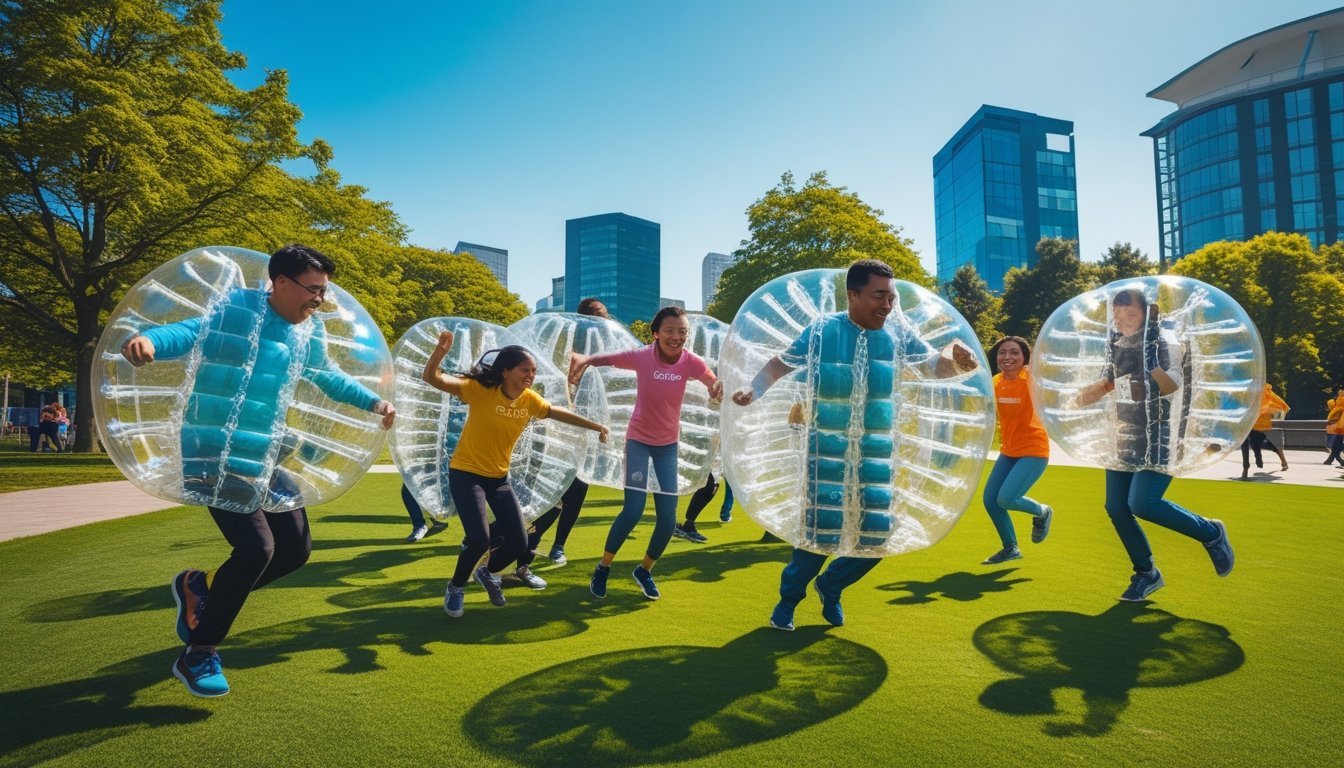
Bubble sports have emerged as an exciting twist on traditional games, offering unique recreational activities that promote fun, interaction, and physical engagement. With a variety of games like bubble sumo and bubble bowling, participants enjoy the thrill of play inside inflatable bubble suits, providing both entertainment and safety. Bubble sports not only attract those looking for a fun day out, but they also serve as valuable tools for social interaction and team building.
Popular Variations: Bubble Sumo, Bubble Bowling, and Beyond
Bubble sports encompass a range of activities beyond the well-known bubble football. Bubble sumo is an exciting variant where participants, encased in half-body bubbles, try to bump each other out of a designated area, mimicking traditional sumo wrestling. This adds a hilarious and energetic twist that’s both challenging and entertaining.
Moving on, bubble bowling puts a human spin on the classic bowling game. Players themselves act as the bowling ball, encased in a zorb, and aim to knock over oversized pins. This variation demonstrates how bubble sports transform conventional games into memorable experiences.
Other innovations like bubble volleyball and nerf wars introduce entirely fresh dimensions to physical fun, using inflatable suits for safe yet thrilling interactions. These activities invite schools and corporate events to rethink engagement through playful strategies that break away from routine sports.
Social and Recreational Appeal
The appeal of bubble sports extends not just to their innovative forms but also to their social aspects. These activities promote interaction among participants, serving as a platform for meeting new people and forging friendships. The shared experience of laughter and the occasional fall rolled onto by inflated bubbles brings a unique bonding opportunity.
Recreational events and birthday parties have embraced bubble sports as a way to offer guests something out of the ordinary. The avant-garde nature of the games ensures they remain a talking point long after the event, with the added bonus of being highly photogenic, perfect for sharing on social media.
Encompassing cultural trends, bubble sports thrive on the intersection of physical activity and entertainment, making them a compelling choice for those who wish to blend fitness and fun.
Team-Building and Event Uses
Organisations have identified the potential of bubble sports as unique team-building exercises. The inflatable bubble suits level the playing field, allowing all participants—regardless of their athletic ability—to engage equally. This encourages cooperation and coordination among team members, making for an effective teamwork exercise.
Event organisers leverage the novelty of these activities to facilitate dynamic events that stray from conventional team-building formats. The sheer unpredictability and laughter invoked by games like bubble football and bubble sumo foster a positive atmosphere.
Corporate retreats, school outings, and community events have adopted bubble sports not just for their entertainment value, but for their ability to unite participants in shared enjoyment. As a result, bubble sports have carved a niche in the team-building landscape, advocating for an experience that intertwines fun and collaboration.
Frequently Asked Questions
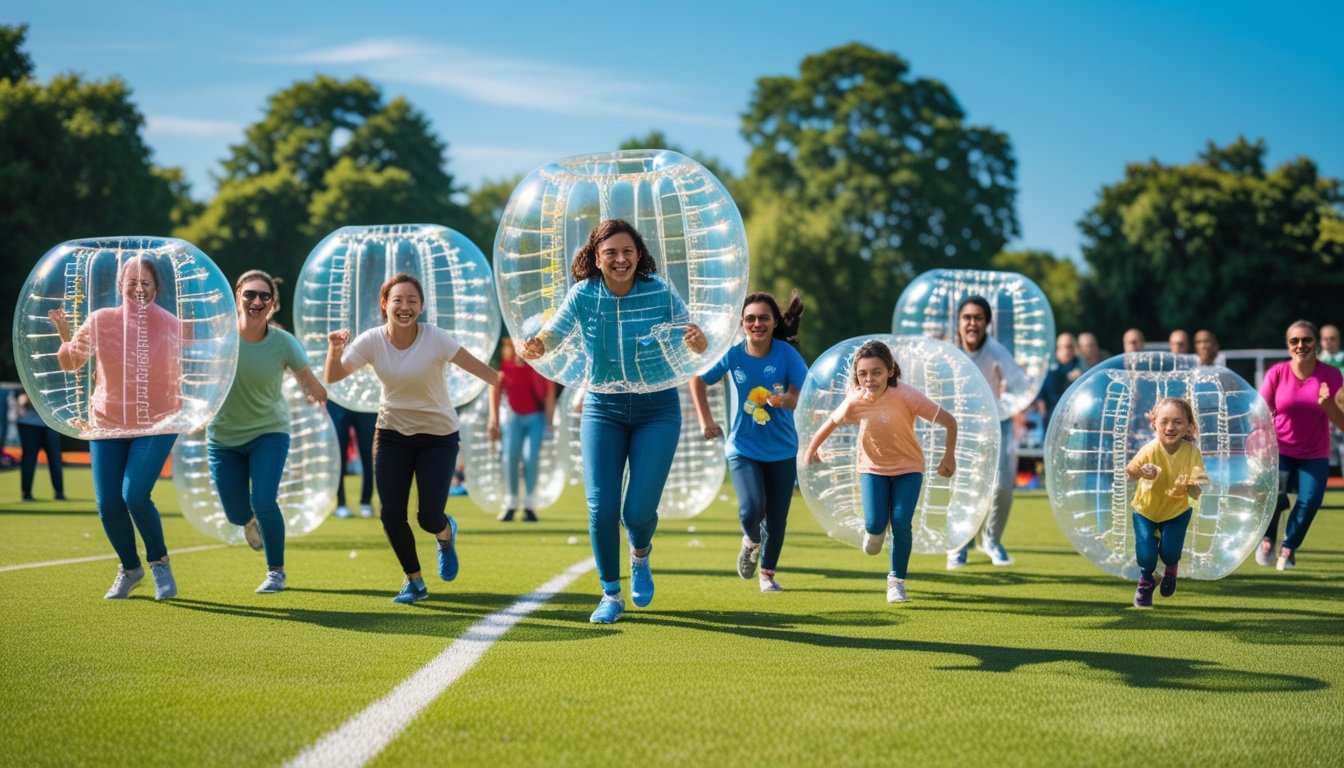
In this section, we address common inquiries about the origins and development of bubble sports. We explore the historical milestones that led to their emergence, the evolution of equipment, and how these sports promote fitness and social engagement.
What historical events led to the development of bubble sports?
The roots of bubble sports are intertwined with the pursuit of making traditional games more engaging and safer. Originally, the idea can be linked to the broader movement of incorporating inflatables in recreational activities, which has been gaining momentum since the late 20th century.
How has the equipment for bubble sports evolved over time?
Initially, bubble sports used basic inflatable bubbles, primarily focused on safety. Over the years, advancements have brought about improvements in design, including better straps and handle placements to enhance player comfort and safety.
What are the rules and objectives of bubble football?
Bubble football shares similarities with traditional football. The primary objective is to score goals, but players must do so while encased in a giant bubble. This adds an extra layer of challenge and fun as players navigate the field while colliding with one another safely.
Which countries were the first to adopt bubble sports, and how have they spread globally?
Bubble sports began gaining popularity in countries like Norway and spread rapidly across Europe. As their popularity increased, more countries across Asia, the Americas, and Australia embraced these activities, contributing to their global appeal.
How do bubble sports contribute to physical fitness and social interaction?
Participating in bubble sports requires physical exertion, promoting cardiovascular health and endurance. Additionally, these sports are inherently social, encouraging teamwork and camaraderie among players.
What are the safety measures and best practices for participating in bubble sports?
Ensuring safety is paramount in bubble sports. Essential measures include wearing appropriate protective gear, checking equipment integrity before play, and following guidelines for safe play. Ensuring all players are aware of the rules and play in a controlled environment significantly reduces the risk of injury.